
Charcoal Rot in sorghum
Charcoal rot is a major disease in the dry sorghum-growing regions.It is particularly destructive on high-yielding sorghums that mature during hot and dry weather if the vigorously growing crop is subjected to moisture stress during the pre-flowering period. Post-flowering stress may be substantially increased by the presence of leaf diseases, droughts, and heavy application of fertilizers, root and shoot damage by insects. Yield losses vary, depending on the weather and the growth stage of the cultivars at the time of infection by the fungi causing this disease. In general, charcoal rot becomes conspicuous near crop maturity. In some fields, particularly of hybrid sorghums, more than 50% of the plants may break at the base and lodge.
Infected Roots
The charcoal rot fungi infects roots of plants growing under adverse environmental conditions, particularly moisture stress and high temperature. Infected roots show water-soaked lesions that turn brown or black (Fig.)
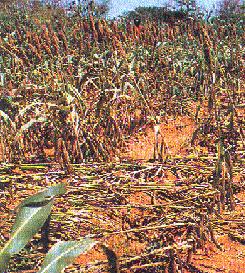
Sorghum lodging due to Charcoal Rot
Affected stalks are soft or spongy at the base and tend to lodge. Lodging is the most apparent symptom of charcoal rot (Fig.).
Disintegration of stalk tissues
If lodged plant is split open and examined, the pith of the stalk may be found in various stages of rotting of the tissues (Fig.).
Management
Maintaining soil moisture through irrigation, if possible, during the post- flowering period can minimize charcoal rot infestation. A balanced fertilizer program is beneficial as with high levels of nitrogen application with low levels of potassium may lead to charcoal rot.High plant population should be avoided. Best plant density based on moisture availability need to adopted. Growing of drought tolerant, lodging resistant, and no senescing types of sorghum like CSV 17, SPV 462 etc. can reduce yield losses from charcoal rot infestations.
- Login to post comments
- 8015 reads