
Submitted by UASR on Mon, 13/02/2012 - 17:06
Posted in
CHILLI MITE
It is a Polyphagous pest widely distributed throughout the tropics and sub tropics.
It belongs to the phytophagous mite family, Tarsonemidae. The peak activity of
pest is noticed in main field from October to November which coincides the dry humid
weather..
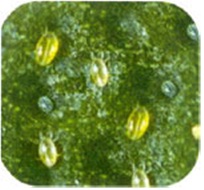
Polyphagotarsonemus latus (Banks) (Tarsonemidae: Acari)
CN: Chilli Yellow mite
Appearance:
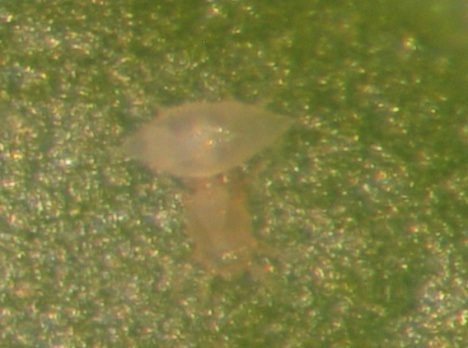
Adults are large, oval, broad and yellowish in colour bear 4 pairs of legs. Larva or nymphs are very tiny with white translucent colour and a translucent stripe on dorsal side while quiescent larva is elongated at both ends and sendentry (immovable)
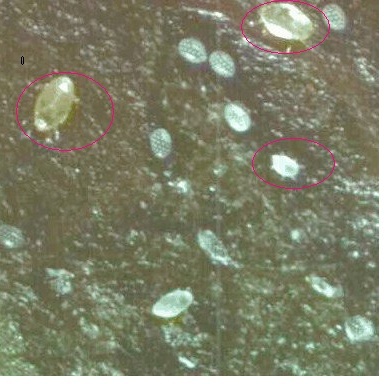
Adults Nymphs Life cycle:
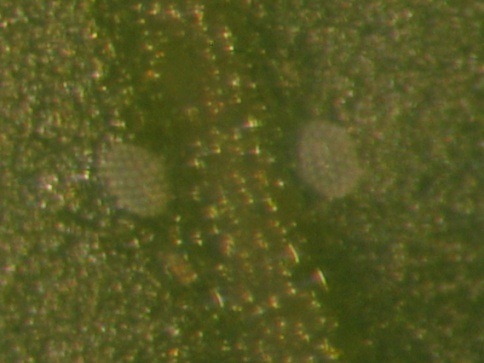
Eggs are deposited singly on the lower surface of the leaf. Incubation period lasts for 1-3 days. First instar nymph or larval period varies from 12h – 1.5 days and the second nymph or larval period is of 12hr. Total nymph or larvae period lasts for 1-2 days. Pupal period lasts for a day. Adult longevity varies from 3 - 5 days. The total life cycle is completed within 6.5 – 10 days.
Eggs
Nature of damage:
Both nymphs and adults suck the sap from young foliage and growing tips.
Damage symptoms:
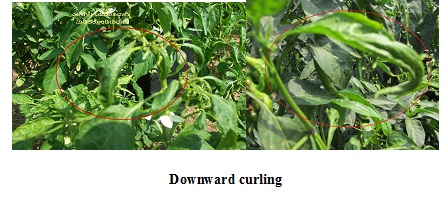
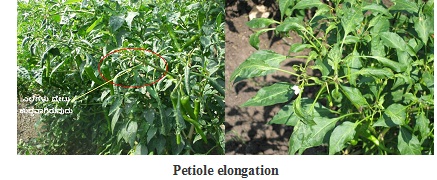
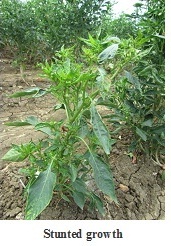
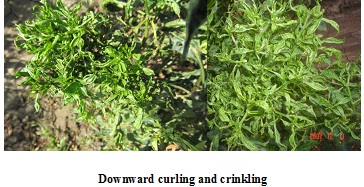
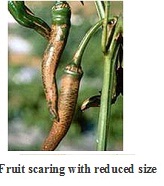
Downward curling and crinkling of leaves giving an inverted boat shaped appearance, elongation of Petiole i.e. rat tail symptom, stunted growth, on fruit scaring is very common with reduced fruit size.
Management:
Cultural practice:
Growing tolerant varieties like Guntur types
Management of nutrients and water will also helps in reducing the mite population.
Biological control: Conservation of potential predator Amblyseius ovalis in chilli ecosystem.
Chemical management:
Karnataka: Spraying of Fenazaquin 10 EC @ 2 ml/lit or Vertimec 1.9 EC @ 0.2 ml/lit or dicofol 18.5 EC @ 2.5 ml/lit or Wettable sulphur @ 3 g/lit for management of mites.
Tamil Nadu and Spice board: Spray dicofol 18.5 EC @ 2.5 ml/ lit or wettable sulphur 50WP @ 5 g m / lit of water and avoid application of monocrotophos.
Andhra Pradesh: Spray Dicofol (kelthane) 5ml or Wettable sulphur 3g/ Micronised sulphur 2.5g/litre of water. In severe conditions repeat the spray with 4-6 days interval.
National Horticulture Board: Spray phasalone 3ml/litre (Severe conditions) or Wettable sulphur 3g/litre of water or dicofal 5ml/lit of water.
- Login to post comments
- 19936 reads