
Submitted by Rakesh Kumar Singh on Wed, 01/09/2010 - 15:56
Posted in
Rhizome rot of Turmeric
Rhizome rot of turmeric is mainly caused by fungal pathogen Pythium graminicolum and P. aphaniderrnatum. In some cases Fusarium solani is also responsible for this disease.
Symptoms
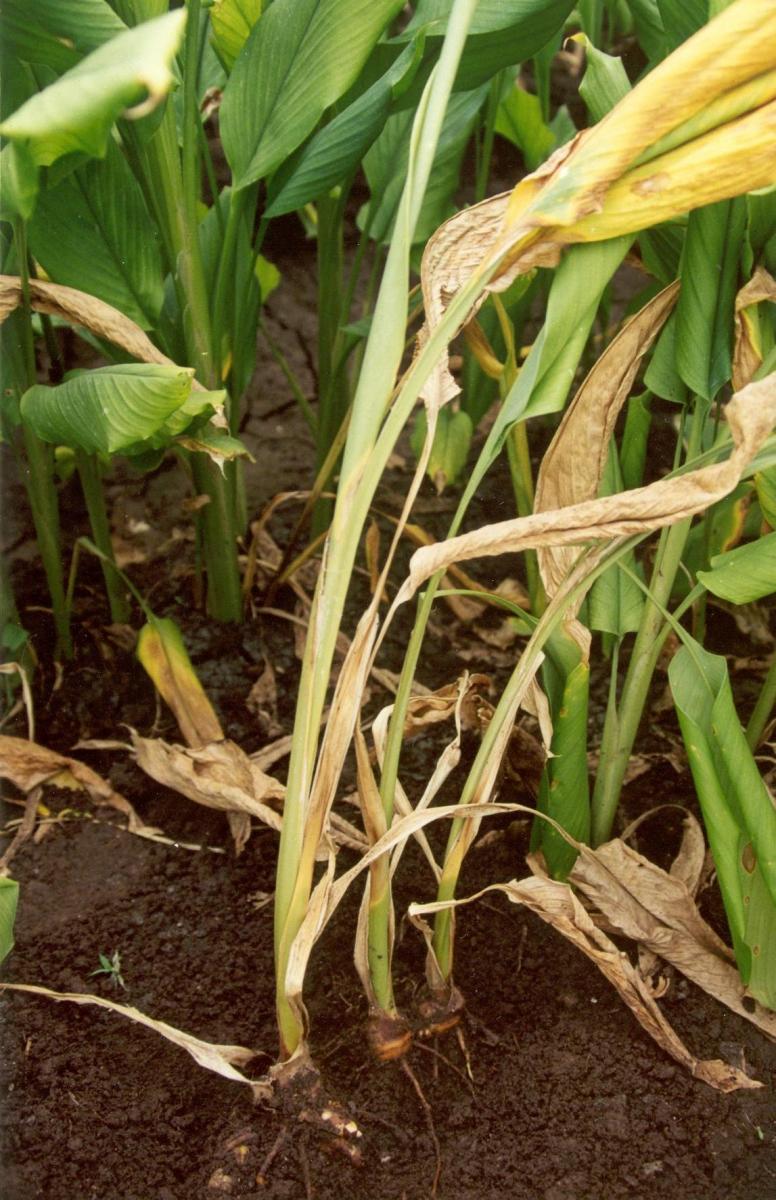
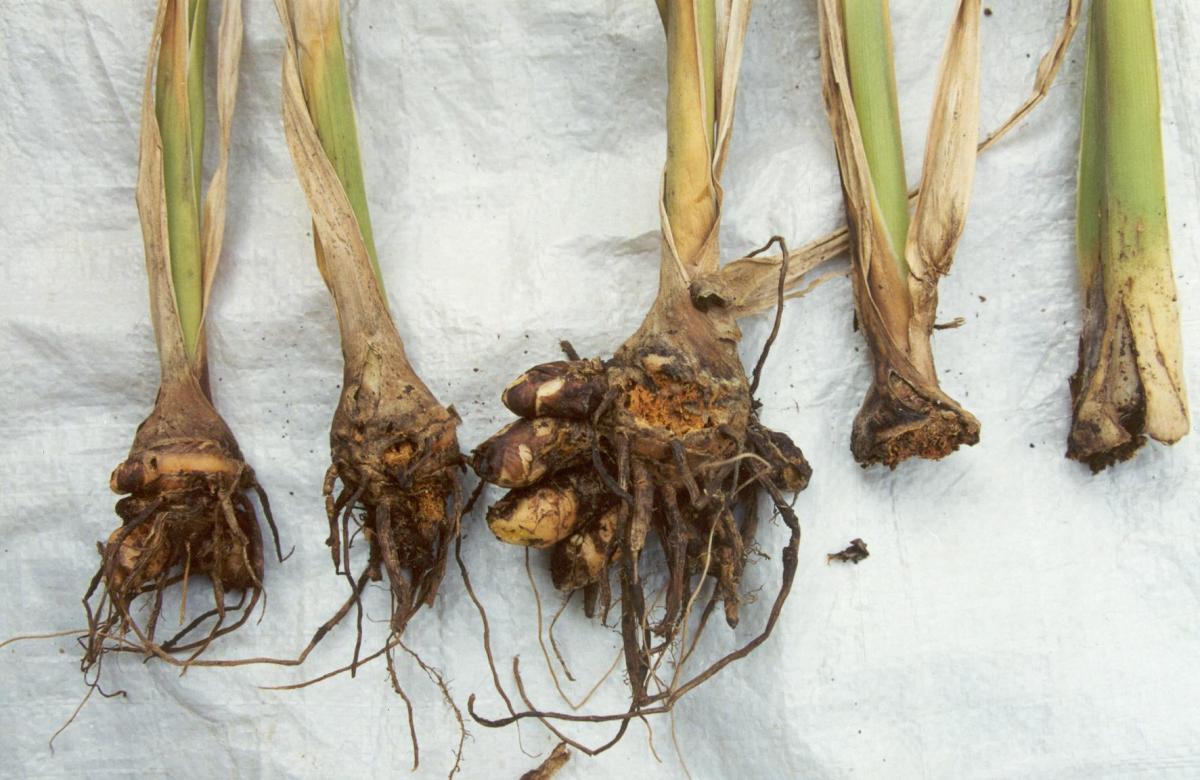
Symptoms are produced both on above ground and below ground part of turmeric plant.
Above Ground: Drying of the leaves starting from the margin can be seen in the field. Water soaked spots in collar region are produced by the fungus. In sever condition whole plant get collapsed.
Below Ground: Fungal infection decays the rhizome as well as roots. Poorly developed roots and less formation of the rhizome are the other symptoms.
Disease Management:
- Healthy rhizomes should be selected from disease free area for sowing. Seed multiplied by tissue culture is very suitable for sowing.
- Grow resistant cultivars like Suvarna, Sugauna and Sudarsana.
- Restricted crop rotation or intercropping suitable for Telangana is with maize and chillies.
- Grow the crop in light soil and avoid water stagnation.
- Remove diseased plant from the field
- Seed treatment is a must. Keep Rhizomes in 3gm Mancozeb or 1gm Carbendazim or 3gm Ridomil M.Z or 2.5 gm Metalaxyl mixed in one litre of water solution for one hour and shade dry before planting.
- Drainch the soil with Mancozeb (3gm/lit) or 3gm Ridomil M.Z.
- The combination of Trichoderma harzianum and Ridomil is effective against rhizome rot caused by F. solani.
Photo courtesy by Bapuji Arcot
- Login to post comments
- 19211 reads